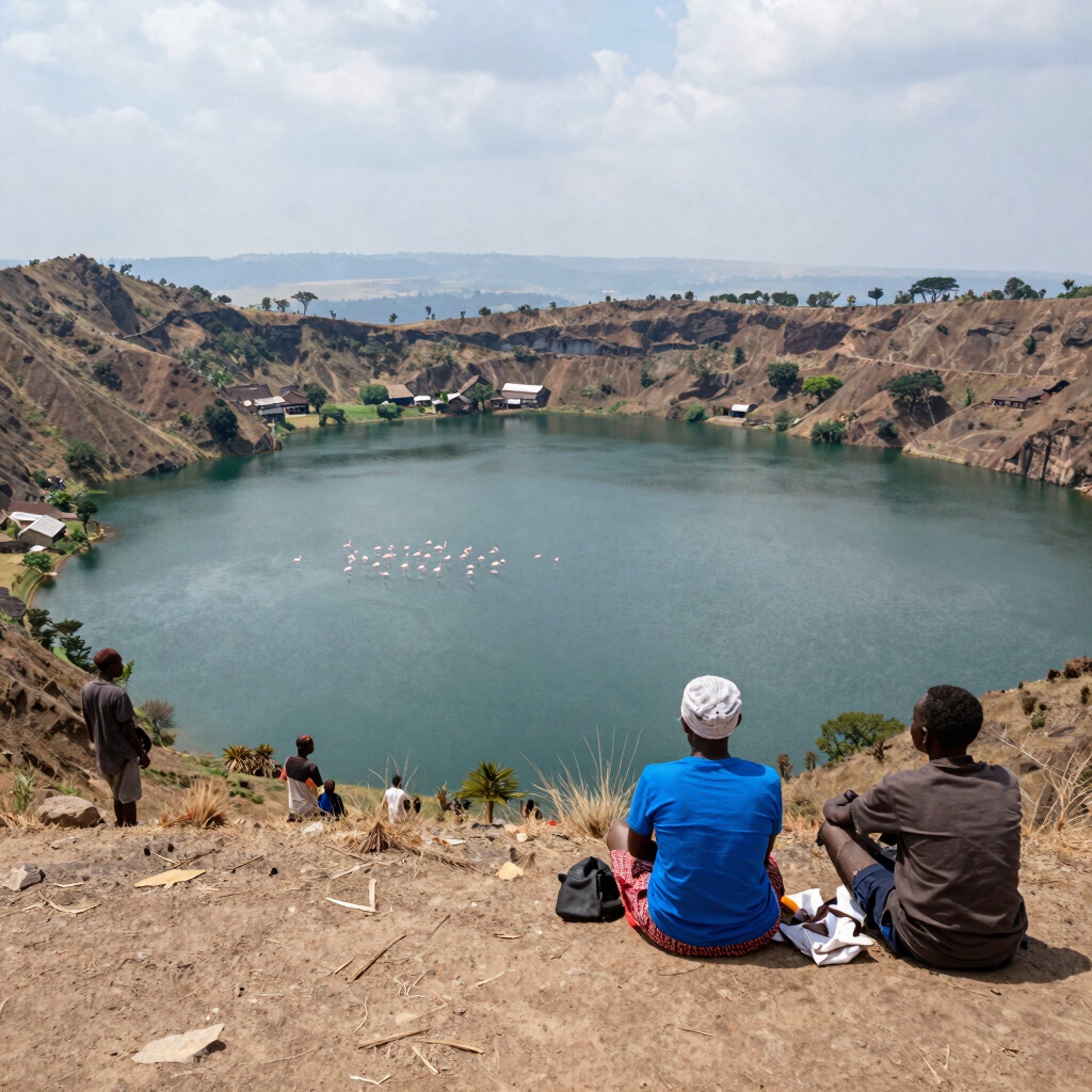
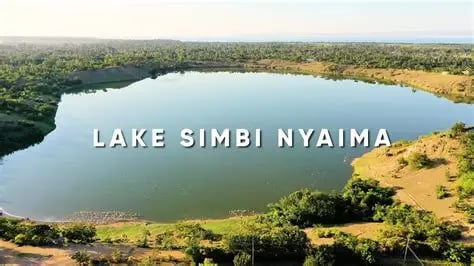
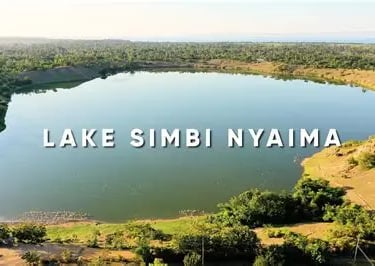
Lake Simbi Nyaima, located near Kendu Bay in Homa Bay County, western Kenya, is a remarkable volcanic crater lake believed to have formed around the 15th century, with later seismic activity and possible volcanic eruptions further shaping its landscape. The lake has no visible inlet or outlet, resulting in highly alkaline and saline waters that create a unique ecosystem supporting diverse birdlife, including migratory flamingos, little grebes, egrets, and Egyptian geese. Beyond its geological significance, Lake Simbi Nyaima is deeply rooted in Luo cultural heritage. Its name, meaning "the sunken village," originates from a legend of a once-prosperous community that was swallowed by a violent storm after its people refused to show compassion to a hungry old woman, leaving a timeless lesson on generosity, hospitality, and respect for strangers. The lake also holds important spiritual and cultural value, with local communities believing its waters possess healing properties, particularly for skin ailments, and continuing to conduct traditional ceremonies along its shores. For generations, residents have also sustainably harvested salt from the lake, making Lake Simbi Nyaima a unique destination where geological history, biodiversity, cultural heritage, and living traditions converge.Write your text here...